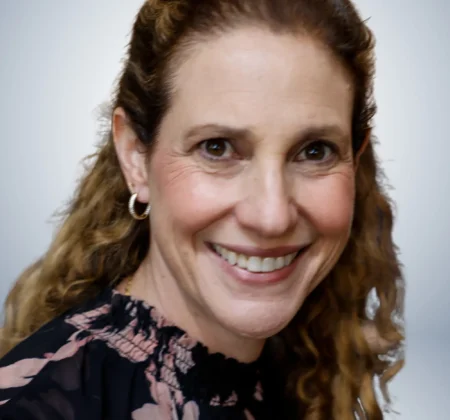
In October 2023, three weeks after the October 7th attack on Israel, I landed at Ben Gurion Airport with a suitcase full of chocolate treats and a list of 30 addresses for Yeshivat Maharat students and alumnae. The airport and the streets were eerily quiet. The country was still in shock. No one knew yet how to offer words of comfort; hope was absent and fleeting, and the future was murky and bleak. I traveled throughout the country, visiting each of my students as they each shared their fears, stressors, and anxiety. I could do nothing else but hold their pain and anxiety with them.
Two and a half years later, everything and nothing has changed. Israel has battled Hamas, thousands of chayalim have fallen, and Israel, even more so, has become the focus of the international community. In true Israeli fashion, daily life continues. After all, Israelis are known for their resilience. And yet…
How is it possible to live this way? Two and a half years of soldiers leaving their families, funerals, and being in a constant state of unknown. Over the past months, there’s been a constant threat of missiles falling and sleepless nights in bomb shelters.
I recently spoke to one of my Maharat students. She shared that despite the fact that she has lived in Israel her entire life, she has suddenly developed panic attacks at every siren. “The psyche is a tricky thing,” she said, attempting to laugh the fear away. It occurred to me how distant and lonely our Israeli counterparts feel. “The heart knows its own bitterness, lev yodea marat nafsho” (Proverbs 14:10). Only the person living it truly knows the weight they carry.
Indeed, how could anyone who does not live there fully appreciate the trauma and disarray that their daily lives have become? And despite the trauma that so many carry, they still get up and continue to learn and teach Torah, spreading light. One student just became a major in the army while parenting young children, and at night she sits with her Shulchan Arukh open, studying for the rabbanut exam, where she will be one of six women to sit for the semikha exam.
Another student shared:
The past months here in Israel have been incredibly intense and frightening. Daily life includes sirens, running to shelters at all hours, day and night, with my baby in my arms and young children by my side, and a constant sense of uncertainty.
The shock has not yet worn off. Words of comfort are still lacking; hope is fleeting and the future still looks uncertain.
She continued:
I know that when you are not here, it’s hard to fully grasp what this feels like, and of course, life continues in your own places. That is natural. At the same time, I find myself longing for a deeper sense of connection, awareness, and solidarity.
She recalled how meaningful that last visit was when I bought chocolates, a lifetime ago. All I did was sit at kitchen tables and listen. Her memory reminded me that even from a distance, we have a role to play.
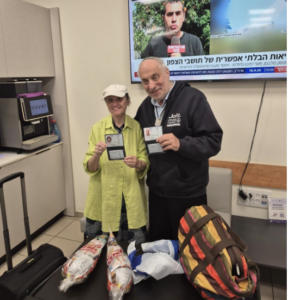
This morning, Rabbi Avi and Toby Weiss fulfilled their lifelong dream of becoming Israeli citizens. Rav Avi is there to sit around the table, but we all can make time and space to listen.
I am reminded of a Hasidic story told by the Kotzker Rebbe:
A student asks the rebbe, “Why does the Torah tell us to place these words upon (al l’vavecha) your hearts? Why does it not tell us to place these words in (b’l’vavecha) our hearts?” The rebbe answers: “It is because as we are, our hearts are closed, and we cannot place the holy words in our hearts. So we place them on top of our hearts. And there they stay until, one day, the heart breaks and the words fall in” (Martin Buber’s Tales of the Hasidim 2.278).
This is how we love. We open our hearts to the stories and anxieties of others, allowing our hearts to remain open to the world around us.
Perhaps that is the truest answer to the impossible question of how one lives this way. We don’t simply endure it from a distance. If you can, you show up with chocolate, open ears, and with your presence at a kitchen table. Or, like Rabbi Weiss and Toby, you move to Israel. Even from a distance, our hearts can reach across the ocean and open up to listen.